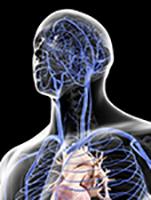
NewYork-Presbyterian and Weill Cornell Medical College Launch New Institute of Cardiovascular Imaging to focus on research, clinical care and education

To help reduce the burden of cardiovascular disease, the nation's leading killer, NewYork-Presbyterian (NYP) and Weill Cornell Medical College (WCMC) have created the Dalio Institute of Cardiovascular Imaging. Raymond T. Dalio, a life trustee of NYP, has made a gift of $20 million through his Dalio Foundation in support of the institute.

Who Conducts the Clinical Trial?

Every clinical trial is led by a “principal investigator,” often a medical doctor or other medical professional. The principal investigator leads the research team that might include doctors, nurses and other health care professionals. The principal investigator is responsible for making sure the study is carried out properly and safely.

What are Phases of Clinical Trials?

The development of new treatments usually progresses through levels of research, called phases, in the process of testing new drugs and procedures before they can be approved and released for general use.

  • Phase 1 Trials
    Phase 1 trials evaluate the safety of a new agent or device. Before these compounds are tested in phase 1 trials, they are extensively studied in laboratory animals. A Phase 1 trial may involve different doses of a drug to learn about how well people tolerate it and to help determine what the most effective dose will be.

  • Phase 2 Trials
    If the Phase 1 trial has shown that people tolerated the new agent well and did not experience serious side effects, the process moves forward to find out if the compound or device might be an effective treatment. Phase 2 trials usually include small groups of participants who have the disease/condition the new therapy is designed to treat. Phase 2 studies give researchers early information as to whether a treatment might be effective while continuing to confirm the safety of the treatment.

  • Phase 3 Trials
    If the previous phases have successfully demonstrated that a new compound or device is safe and may potentially be effective,  a phase 3 study is performed.  Phase 3 studies are generally a comparison between the new compound or device and the current standard of care.  Results from a Phase 3 study can lead to approval from the Food and Drug Administration (FDA). 

  • Phase 4 Trials
    After a compound or device is approved by the FDA and available for use, the FDA may require additional safety information be collected on the agent or device. 

Clinical Trials

The physicians at NewYork-Presbyterian/Weill Cornell Medical College are dedicated to the pursuit of breakthrough research and the safe and ethical management of clinical trials. 

If you are interested in joining a clinical trial, please browse our studies by specialty using the links below.

What is a Clinical Trial?

Clinical trials are intended to advance medical knowledge. Clinical trials are also called clinical studies or research studies. Clinical trials are the safest and most effective way to find new treatments and interventions and to improve health outcomes.

Clinical trials may be conducted to determine if a new agent or device is safe and effective for people to use. Sometimes clinical trials are conducted to discover new ways of using existing treatments, or to compare existing treatments to find out which is better.

Types of clinical trials include:

Training Requirements

Training is a key component of conducting clinical research. It is essential to have comprehensive and standardized training requirements to ensure understanding of the regulations governing clinical research. These trainings include protection of human subjects, Good Clinical Practice (GCP), Health Insurance Portability and Accountability Act (HIPAA) privacy and security, and laboratory safety training for handling of biological specimens.

Joint Clinical Trials Office Contacts

General Contact Information

Contract-related matters: JCTOcontracts@med.cornell.edu
Operations-related matters: JCTOoperations@med.cornell.edu
Finance-related matters: JCTOfinance@med.cornell.edu
IRB-related matters: IRB@med.cornell.edu
Conflicts-related matters: Conflicts@med.cornell.edu

Partner with the Joint Clinical Trials Office (JCTO)

The Joint Clinical Trials Office (JCTO) values partnerships with industry, academic medical centers, foundations and government agencies.

For inquiries into our program please contact:

For general Contract-related matters email JCTOcontracts@med.cornell.edu
For general Operations-related matters email JCTOoperations@med.cornell.edu
For general Finance-related matters email JCTOfinance@med.cornell.edu

Patients, Families and Friends

Weill Cornell Medicine (WCM)/NewYork-Presbyterian (NYP) is a leading center for clinical research. Our physicians and researchers are internationally recognized for cutting-edge research that helps find new treatments and therapies for a wide range of health conditions. All of today’s standard treatments were developed in clinical trials, many of them at WCM/NYP.

Investigators and Study Teams

The Weill Cornell Medicine (WCM)/NewYork-Presbyterian (NYP) Joint Clinical Trials Office (JCTO) provides three main areas of support to investigators and study teams in the management of clinical trials. The business operations arm manages budgeting, finance and contracts. The clinical trial operations arm administers the Protocol Review & Monitoring Committee (PRMC) and assists in regulatory, data management, quality assurance, training and study feasibility, in the areas of General and Cancer clinical trials.